

# From Blank Page to Banger: How ai is Revolutionizing Song Lyric Generation
Let’s face it, hitting writer’s block when you’re trying to craft the perfect song lyrics is a real buzzkill. You’ve got a killer melody humming in your head, a beat that makes you want to move, but the words? They’re just… not happening. You stare at the blank page, tap your pen against your teeth, maybe even try to force a rhyme or two, but it just sounds clunky and uninspired. For ages, this has been the bane of many a songwriter, amateur and pro alike. But what if I told you there’s a new co-writer in town, one that never sleeps, never gets tired, and has access to an almost infinite wellspring of linguistic possibilities? That’s right, we’re talking about Artificial Intelligence, and it’s shaking up the world of song lyric generation in ways we’re only just beginning to fully grasp.
Gone are the days when AI was just a sci-fi dream. Now, it’s a very real, very powerful tool that’s becoming increasingly accessible to anyone with an internet connection. When it comes to churning out song lyrics, AI isn’t here to replace human creativity, but rather to supercharge it. Think of it as your ultimate brainstorming partner, a tireless muse that can offer fresh perspectives, unexpected rhymes, and even entire verses tailored to your specific needs. It’s like having a team of poets, wordsmiths, and lexicographers at your beck and call, ready to pour out ideas whenever inspiration strikes – or, more accurately, doesn’t strike.
The Magic Behind the Machine: How AI Learns to Write Lyrically
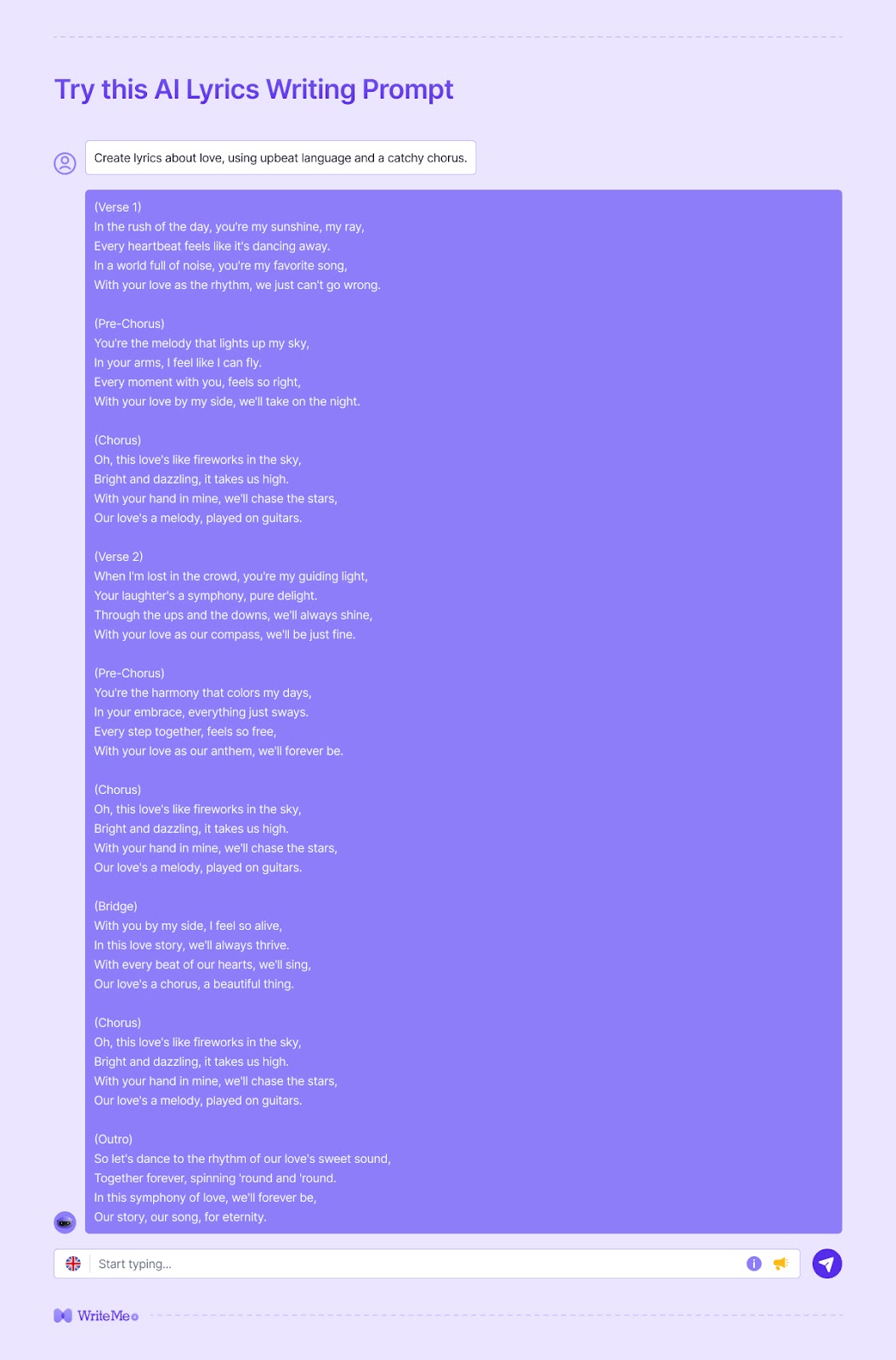
So, how does an AI, essentially a bunch of clever algorithms and data, learn to string together words in a way that sounds like a song? It’s all about massive amounts of data and sophisticated pattern recognition. These AI models, often called Large Language Models (LLMs), are trained on enormous datasets of text, including countless song lyrics across every genre imaginable. They absorb the nuances of language, the rhythm of poetry, the common themes in love songs, the gritty realism of hip-hop, the narrative structures of country ballads, and everything in between.
Imagine feeding an AI every song ever written by your favorite artists, then every chart-topper from the last fifty years, then every obscure indie track you can find. It processes this colossal library of words, phrases, rhymes, and sentiments. It starts to identify patterns: what words tend to go together, what kind of imagery is common in a certain genre, how verses and choruses are typically structured. It’s not “understanding” in the human sense, but it’s incredibly adept at recognizing statistical relationships and predicting what comes next based on what it’s learned.
When you give the AI a prompt – maybe a theme like “lost love” or a specific emotion like “hope” – it sifts through its vast knowledge base to generate text that aligns with your input. It can even take into account desired styles, moods, and even specific words you want to include. Some of the more advanced AI models can even mimic specific artists’ styles, though this often treads into ethical grey areas regarding intellectual property and artistic integrity.
More Than Just Rhyme & Reason: The Capabilities of AI Lyric Generators
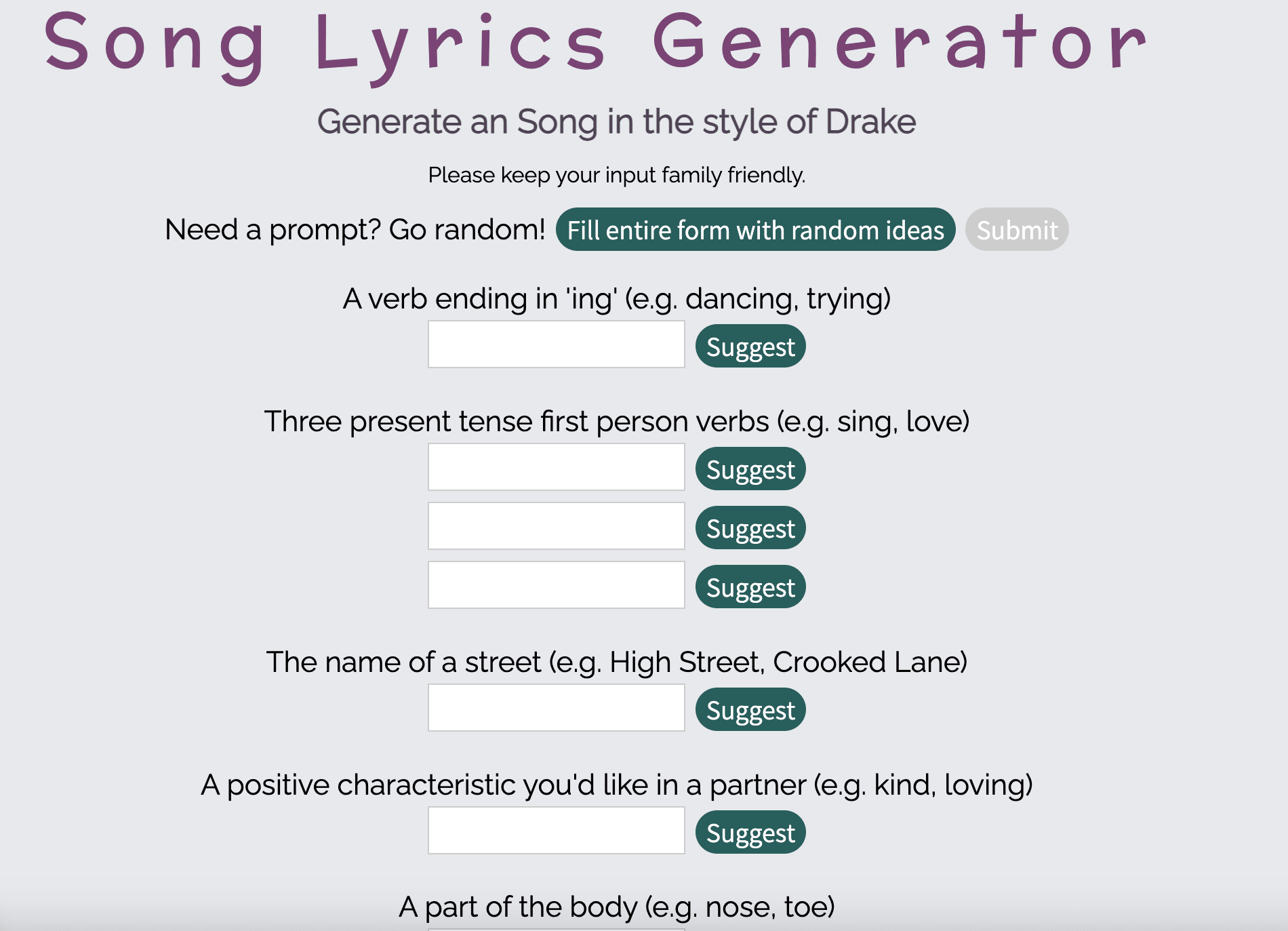
The capabilities of AI lyric generators go far beyond simply finding rhymes. While a good rhyming dictionary is always handy, these tools offer a much more comprehensive songwriting assistant experience. Here’s a breakdown of what many of these platforms can do:
Genre-Specific Generation: Want a country ballad about pickup trucks and heartbreak? Or a synth-pop anthem about neon lights and freedom? You can often specify the genre, and the AI will adapt its output to match the typical lyrical conventions, vocabulary, and even emotional tone of that style.
The Good, The Bad, and The Lyrical: Pros and Cons of AI in Songwriting
Like any powerful tool, AI lyric generation comes with its own set of advantages and disadvantages.
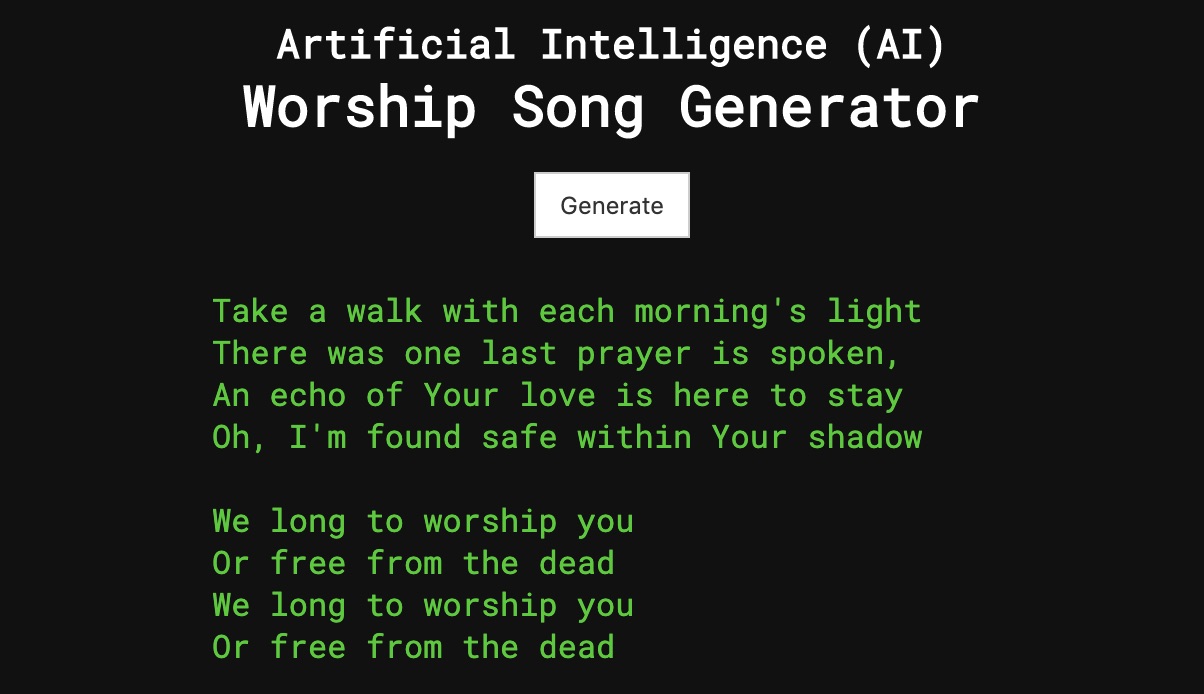
Beating Writer’s Block: This is arguably the biggest win. When inspiration dries up, AI can be a kick-start, providing fresh ideas and breaking you out of creative ruts.
Lack of Genuine Emotion and Experience: This is the big one. While AI can mimic emotional language, it doesn’t feel emotion. Lyrics born from real-life joy, heartbreak, or struggle often carry a depth and authenticity that AI, by its very nature, cannot replicate. This can lead to lyrics that sound technically correct but feel hollow.
Real-World Rhythms: AI in Action
So, are artists actually using this stuff? Absolutely! From independent bedroom producers to established artists exploring new frontiers, AI lyric generators are finding their way into the creative process.
Imagine a singer-songwriter who’s got a catchy chorus but is stuck on the verses. They plug in their chorus, describe the vibe, and the AI offers a few verse options. They might not use them word-for-word, but one particular phrase or image might spark a whole new direction, saving them hours of staring at a blank screen.
Or consider a band experimenting with a new genre. They’ve always written rock anthems, but they want to try a dreamy, ethereal pop track. They can use an AI to generate lyrics that fit the new aesthetic, helping them to find the right vocabulary and imagery for their sonic exploration.
Beyond direct lyric generation, AI is also being used in other fascinating ways in songwriting:
Melody Generation: Some AI tools can generate not just lyrics, but also melodies and chord progressions, creating complete song skeletons.
The Beatles’ “Now and Then” is a prime example of AI’s restorative power in music. While not a lyric generation case, the technology used to isolate John Lennon’s voice from an old demo showcased how AI can breathe new life into existing creative works, hinting at its potential for future artistic endeavors.
The Future is Calling (and Singing): What’s Next for AI and Lyrics?
The field of AI is evolving at an astonishing pace, and AI lyric generation is no exception. We can expect these tools to become even more sophisticated and integrated into the creative workflow.
Here’s a peek at what the future might hold:
More Nuanced Understanding of Emotion: As AI models become more advanced, they might be able to better “understand” and express complex human emotions, leading to more emotionally resonant lyrics.
Human Heart, AI Spark: The Unbeatable Combination
Ultimately, while AI is a truly groundbreaking tool for generating song lyrics, it’s not a replacement for the human touch. The most compelling songs, the ones that truly move us, often come from deeply personal experiences, raw emotions, and the unique perspectives of human artists. AI can mimic these things, but it can’t live them.
The true power lies in the collaboration between human ingenuity and artificial intelligence. AI can handle the heavy lifting of brainstorming, pattern recognition, and rapid iteration, freeing up human songwriters to focus on the truly creative, soul-stirring aspects of their craft. It allows artists to experiment more, overcome creative blocks, and bring their musical visions to life faster and more efficiently than ever before.
So, the next time you find yourself staring at that blank page, wondering where the words went, don’t despair. Consider inviting an AI lyric generator to the party. It might just be the spark you need to turn your blank page into a banger, proving that sometimes, the best partnerships are the ones you never expected. The future of songwriting is here, and it’s a harmonious blend of human heart and AI spark, creating a symphony of possibilities.