

Unlocking Efficiency: The Best ai Summarizers for Articles (And Why They Matter for Your SEO)
Hey there, content creators, researchers, and anyone drowning in a sea of information! Ever felt like there just aren’t enough hours in the day to read every single article, report, or academic paper that comes your way? You’re not alone. In today’s fast-paced digital world, information overload is a real thing. But what if there was a magic wand that could instantly distil the essence of any long-form text, giving you the key takeaways without the exhaustive read?
Well, that magic wand actually exists, and it’s powered by artificial intelligence: welcome to the world of AI summarizers. These clever tools are changing the game, not just for personal productivity, but also for something super important if you want your online content to shine: Search Engine Optimization (SEO). You might be thinking, “How can summarizing tools help my long articles rank?” Stick around, because we’re about to dive deep into how these unsung heroes of efficiency can indirectly boost your SEO game, even without images.
The Power of Long-Form Content for SEO (Even Without Pictures!)

Before we jump into the AI summarizers themselves, let’s talk about why long-form articles, like this one you’re reading, are so crucial for ranking on Google. You might be surprised to hear that you don’t always need flashy images or videos to dominate the search results. While visuals certainly help with user engagement, a well-crafted, in-depth text piece can be a powerhouse on its own.
Google’s algorithms, like RankBrain and the more recent helpful content updates, are getting smarter. They’re all about understanding user intent and providing the most comprehensive, valuable, and authoritative answers to search queries. And guess what often provides that depth and authority? You guessed it: long-form content.
Here’s why long articles, even plain text ones, are an SEO goldmine:
Comprehensive Coverage and Semantic Richness: Longer articles allow you to explore a topic in incredible detail. This means you naturally incorporate a wider range of keywords, including long-tail keywords (those super specific phrases people search for). Google loves content that covers a topic exhaustively, demonstrating a deep understanding and providing a complete answer. Think of it like this: if someone is searching for “how to fix a leaky tap,” a 200-word blog post might give them a couple of tips. A 2000-word guide, however, can cover everything from identifying the leak to choosing the right tools, different types of taps, common pitfalls, and even preventative maintenance. This thoroughness signals to Google that your content is a valuable resource.
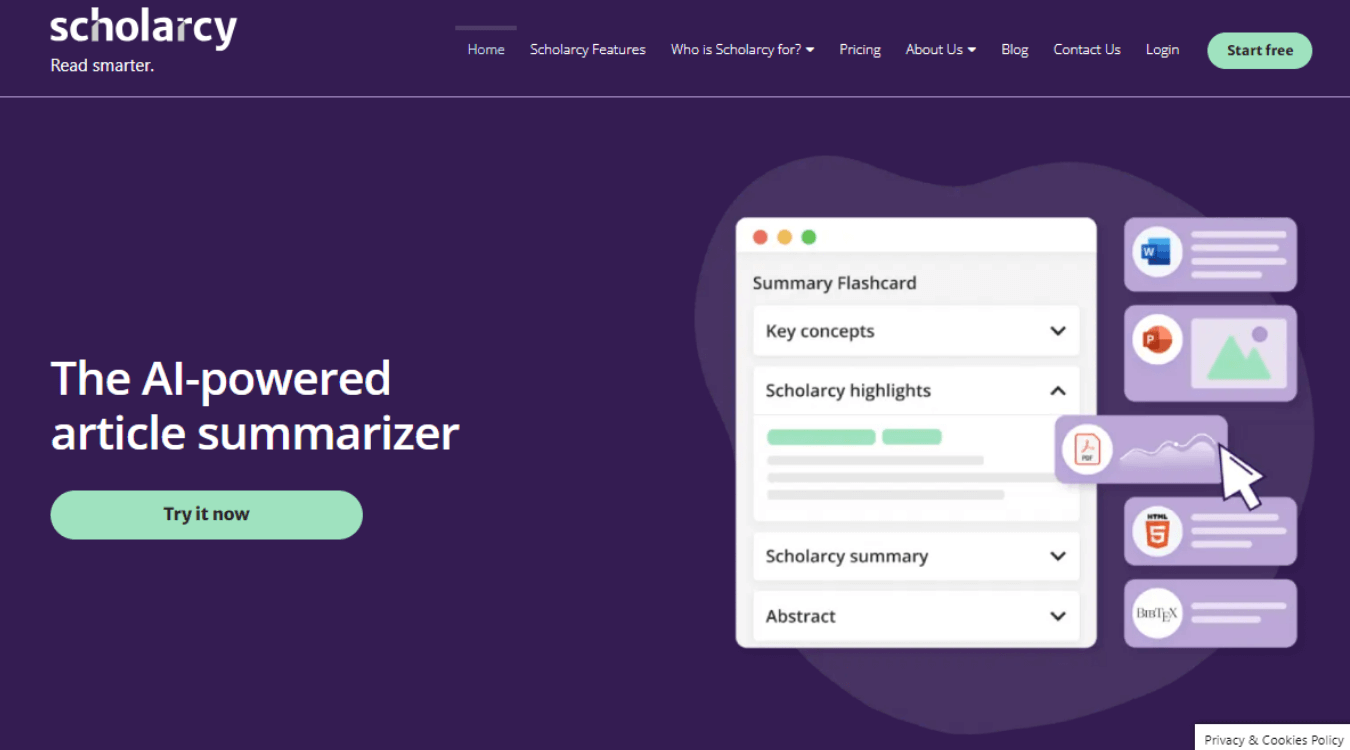
So, even without a single image, a well-structured, detailed, and truly helpful long-form article can be a fantastic way to climb the Google rankings. Now, how do AI summarizers fit into all of this?
The AI Advantage: Why Summarizers are Your Secret Weapon
You might be thinking, “If I’m writing long articles for SEO, why would I need a tool to summarize them?” That’s a fair question! The answer isn’t about summarizing your own long-form content for Google, but rather using these tools strategically in your content creation process.
Here’s how AI summarizers become your secret weapon:
1. Rapid Research and Content Ideation:
2. Streamlining Content Outlining and Structure:
3. Boosting Readability and User Experience (Even for Long Content):
4. Content Repurposing (Indirect SEO Benefit):
Now that we understand why these tools are so useful, let’s explore some of the best AI summarizers out there for articles, keeping in mind ease of use, accuracy, and features.
The Cream of the Crop: Top AI Summarizers for Articles
The AI summarizer market is growing, with new tools popping up all the time. Here’s a look at some of the best you’ll find in 2025, perfect for article summarization:
1. ClickUp’s AI Summarizer (ClickUp Brain):
While ClickUp is primarily a work management platform, its built-in AI Summarizer, part of ClickUp Brain, is a strong contender. It’s designed to streamline information retrieval and content creation.
Why it’s great: It’s integrated into a broader productivity suite, making it useful if you’re already using ClickUp for project management or document collaboration. It can summarize various document types and is particularly noted for summarizing meeting notes and helping automate tasks.
2. Jasper (Formerly Jasper AI):
Jasper is a well-known name in the AI writing assistant space, and its summarization capabilities are robust. It’s built more for content creators and enterprise teams, offering a lot of flexibility.
Why it’s great: High-quality summaries, ability to generate summaries in over 25 languages, and a Chrome extension for easy summarization of emails and Google Docs. You can also customize prompts to get summaries in your brand’s voice and tone.
3. Writesonic:
Writesonic is another powerful AI writing tool that offers excellent summarization features, especially for content creation and distribution.
Why it’s great: Capable of summarizing multiple blog posts and even rewriting them into a single long-form article (though always review AI-generated content for accuracy and originality). It can also create channel-specific summaries, which is great for social media or other platforms. Supports 25+ languages.
4. Paraphraser.io:
If you’re looking for a good free option, Paraphraser.io often comes up. It’s particularly useful for summarizing lengthy articles and academic documents.
Why it’s great: Free to use, supports summarization in nine languages, and even includes paraphrasing, plagiarism, and grammar checks as part of its free plan.
5. Scribbr:
Scribbr is often cited as an excellent free text summarizer, especially popular in academic research circles.
Why it’s great: Generates both text and bullet-point summaries, allows you to customize the focus of your summary by choosing keywords, and lets you re-summarize to change the length. You can also download summaries as a TXT file.
6. Gimme Summary AI:
This one is a fantastic free option for web article summarization, available as a Chrome browser extension.
Why it’s great: One-click summaries of web articles directly from their web page. It’s free, no ads, and no need to provide personal details.
7. Notta:
While primarily known as a note-taking app that transcribes audio, Notta excels at summarizing meeting transcripts and other spoken content, making it great for summarizing webinars or podcasts that you might want to reference in your articles.
Why it’s great: Generates chapter-wise summaries of transcripts, uses customizable templates, and allows sharing of summarized text via a link.
8. Copy.ai:
Copy.ai offers a variety of AI writing tools, including document summarization with an emphasis on workflow automation.
Why it’s great: Provides pre-built summary templates and allows for automated workflows, which can be useful for summarizing documents in bulk or creating different versions. It can also generate meta titles and descriptions, showing its understanding of SEO.
9. Vomo AI:
A newer player in the game, Vomo AI is getting good reviews for its clean UI and fast results, especially for transcribing and summarizing audio like YouTube videos or voice recordings.
Why it’s great: Excellent for audio/video summarization, allows you to chat with the transcript to ask follow-up questions, extract quotes, or get action items.
10. Recall:
Positioned as a top-tier summary tool for blogs, news, and video transcripts, Recall offers a browser extension and allows you to save summaries for later.
Why it’s great: High summary quality across various content types, browser extension for convenience, ability to save summaries.
How to Choose the Best AI Summarizer for Your Needs
With so many options, how do you pick the right one? Consider these factors:
Your Primary Use Case: Are you mostly summarizing web articles, academic papers, meeting notes, or something else? Some tools specialize in certain formats.
A Word of Caution: AI Summarizers and Originality
It’s crucial to remember that while AI summarizers are powerful tools for research and understanding, they are not a substitute for original writing. You should never directly copy and paste summaries generated by AI into your published articles.
Here’s why:
Plagiarism: Directly copying AI-generated text, even summaries, can be considered plagiarism if not properly attributed or rephased.
Think of AI summarizers as your incredibly efficient research assistants. They help you process information faster, allowing you to spend more time on crafting a truly original, insightful, and comprehensive long-form article that will genuinely benefit your readers and, in turn, rank higher on Google.
The Future is Efficient: Embracing AI in Your Workflow
The world of content creation and SEO is constantly evolving, and artificial intelligence is playing an increasingly significant role. AI summarizers are just one piece of this puzzle, but they are a valuable one. By integrating these tools into your workflow, you can become a more efficient researcher, a more effective content planner, and ultimately, a more successful SEO practitioner.
So, go ahead, explore some of these fantastic AI summarizers. You might just find your new favorite productivity hack that not only saves you time but also helps your long, insightful articles climb their way to the top of those Google search results, even without a single image in sight. Happy writing!