

ai Everywhere: How Artificial Intelligence is Silently Shaping Our Daily Lives
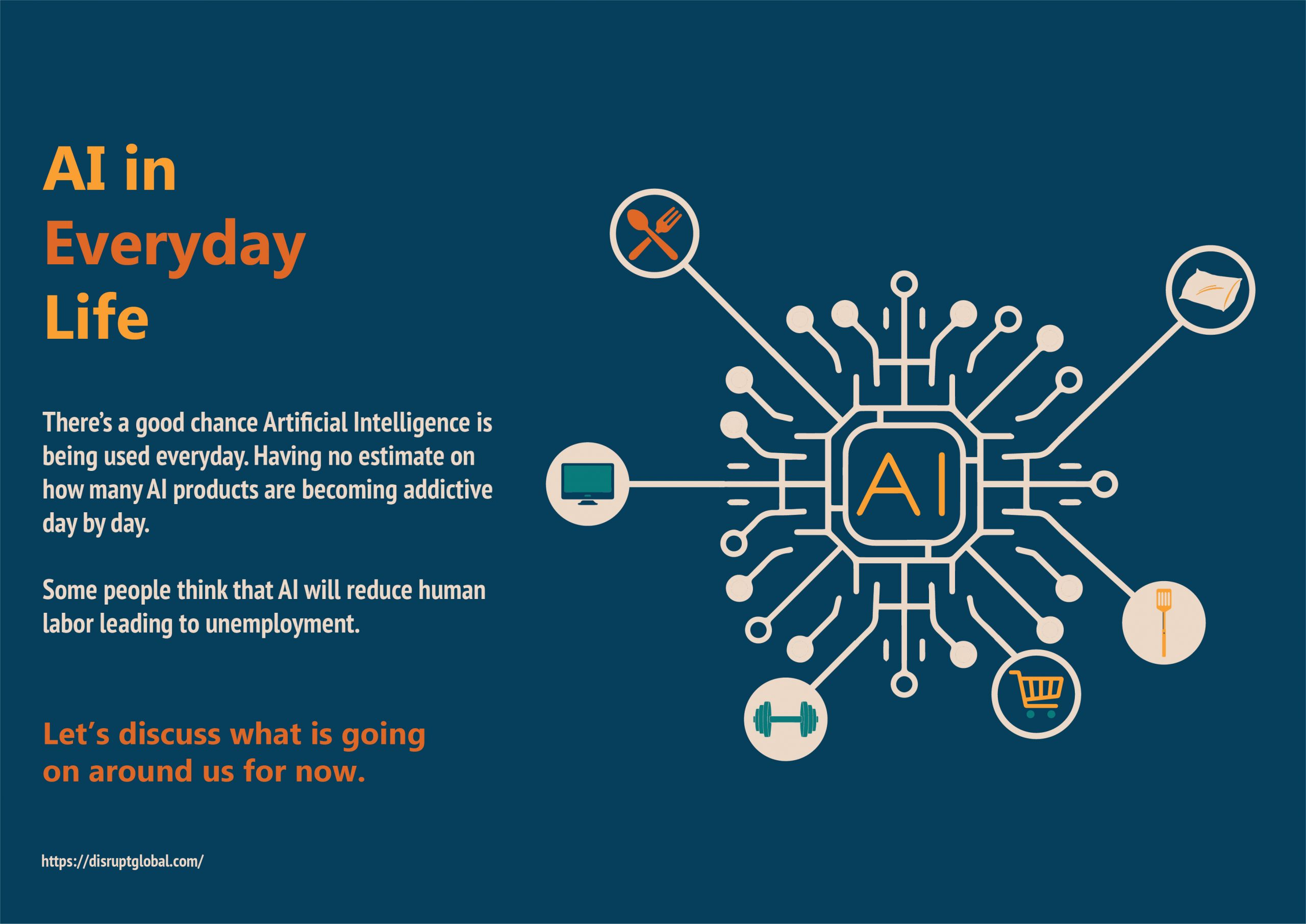
Artificial Intelligence (AI) used to be something we only saw in sci-fi movies – robots taking over the world or super-intelligent computers having deep philosophical conversations. But fast forward to today, and AI isn’t just a futuristic fantasy; it’s quietly woven itself into the very fabric of our everyday lives. From the moment we wake up until we finally hit the hay, AI is working tirelessly behind the scenes, making things easier, more efficient, and often, just plain smarter. You might not even realize how much you interact with AI on a daily basis, but once you start looking, you’ll see it’s truly everywhere.
Waking Up to an AI-Powered World
Let’s start with your morning routine. How many of us reach for our smartphones the moment our alarm goes off? That alarm itself might be AI-powered, adjusting to your sleep patterns to wake you up at the optimal time. But it doesn’t stop there.

Digital Assistants and Smart Homes
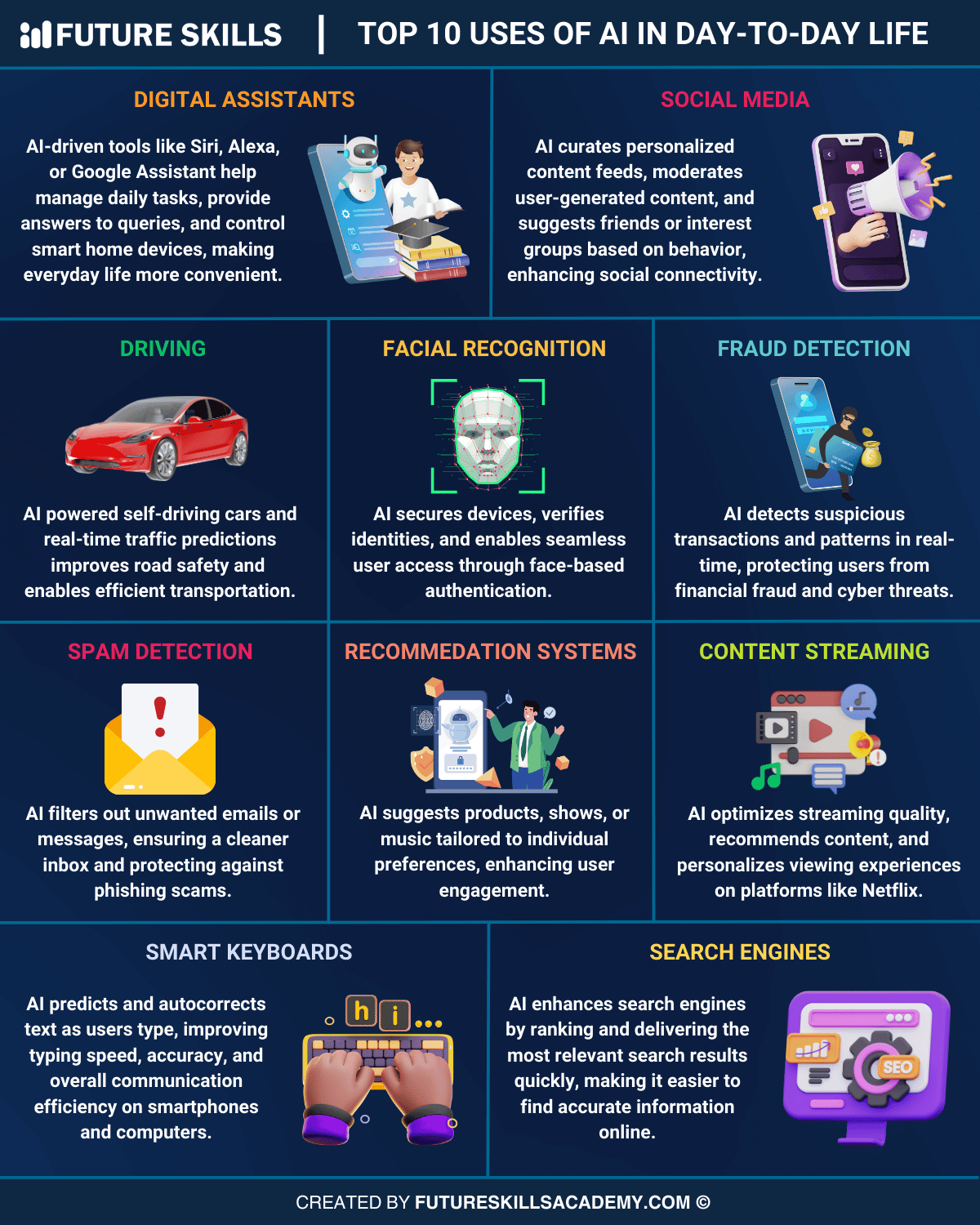
Your digital assistant, whether it’s Siri, Alexa, or Google Assistant, is a prime example of AI in action. When you ask it to tell you the weather, play your favorite song, or set a reminder, you’re interacting with sophisticated natural language processing (NLP) algorithms. These AI systems understand your spoken commands, process them, and then deliver the information or perform the action you requested. It’s not just about simple commands anymore; these assistants are getting smarter, learning your preferences and anticipating your needs.
Beyond your phone, smart home devices are becoming increasingly common. Your smart thermostat, for instance, learns your preferred temperatures throughout the day and adjusts itself automatically, saving you energy and keeping your home comfortable. AI-powered security cameras can differentiate between a pet, a person, or a package, sending you alerts only when something truly noteworthy happens. Even your smart lighting system might use AI to learn your daily schedule and adjust brightness and color temperature accordingly.
Navigating Your Day with AI
Getting from point A to point B has been revolutionized by AI. Gone are the days of printing out maps and hoping for the best.
Smart Navigation and Ride-Sharing
Navigation apps like Google Maps and Waze are powered by complex AI algorithms that analyze real-time traffic data, road closures, accidents, and even weather conditions to suggest the fastest and most efficient route. They can predict traffic jams before they even happen and reroute you to avoid delays. Similarly, ride-sharing apps like Uber and Lyft use AI to match riders with nearby drivers, optimize routes, and even dynamically price fares based on demand and traffic. This isn’t just about convenience; it’s about making transportation safer and more efficient for everyone.
AI in Your Workspace
Even if you’re not in a tech-heavy industry, AI is likely making your work life a little smoother.
Productivity Tools and Email Management
From smart email filters that block spam and categorize important messages to predictive text features that suggest words and phrases as you type, AI is helping us manage our digital communications more effectively. Grammar and spell-check tools, which are essential for many of us, rely heavily on AI to identify errors and suggest improvements. AI can also help automate repetitive administrative tasks, like scheduling meetings or generating reports, freeing up valuable time for more creative and strategic work.
Entertainment and Shopping Experiences
When you unwind after a long day, AI is still there, shaping your entertainment and shopping experiences.
Personalized Recommendations
Think about how streaming services like Netflix, Spotify, and YouTube work. Their recommendation engines are powered by advanced AI that analyzes your viewing or listening history, preferences, and even what other users with similar tastes are enjoying. This allows them to suggest movies, TV shows, and music that you’re highly likely to love, keeping you engaged and entertained. Similarly, online shopping platforms use AI to recommend products based on your Browse history, past purchases, and what’s popular with other customers, making your shopping experience more personalized and efficient.
Social Media and Content Curation
Social media platforms are constantly using AI to curate your feeds, showing you content they think you’ll find most engaging. They analyze your interactions – what you like, share, and comment on – to determine what to show you next. AI is also used for content moderation, helping to filter out spam, inappropriate content, and misinformation, aiming to create a safer online environment.
The Bigger Picture: AI’s Impact on Health and Finance
Beyond these everyday interactions, AI is making significant strides in critical areas like healthcare and finance.
Healthcare Advancements
In healthcare, AI is being used to analyze vast amounts of patient data to assist with early disease diagnosis, identify patterns that might indicate health risks, and even suggest personalized treatment plans. AI-powered tools can help doctors organize patient notes and create comprehensive files, streamlining administrative tasks and allowing medical professionals to focus more on patient care. Wearable health devices like smartwatches use AI to monitor your heart rate, sleep patterns, and activity levels, providing insights into your overall well-being and even detecting potential health issues.
Financial Management and Security
In the financial world, AI plays a crucial role in fraud detection, analyzing transaction patterns to identify suspicious activity and protect your accounts. Many banks use AI-powered chatbots for 24/7 customer service, providing instant answers to common queries and streamlining basic transactions. AI algorithms also assist in predictive analytics, helping financial institutions forecast market trends and make more informed investment decisions.
Conclusion
Artificial Intelligence is no longer a niche technology; it’s an indispensable part of our modern lives. From the seemingly minor conveniences like voice assistants and personalized recommendations to the more significant impacts on healthcare and finance, AI is constantly working in the background to simplify tasks, enhance efficiency, and create more personalized experiences. While it’s easy to take these advancements for granted, understanding the pervasive nature of AI helps us appreciate how much it has transformed our daily routines. As AI continues to evolve, its presence in our lives will only grow, promising even more innovative solutions and seamless interactions in the future.
5 Unique FAQs After The Conclusion
1. How does AI learn about my preferences without me explicitly telling it?
AI learns about your preferences through a process called machine learning, specifically by analyzing your past behavior and interactions. For example, if you consistently click on certain types of news articles or watch specific genres of movies, the AI in those apps will “learn” that you prefer those categories. It also looks at what other users with similar behaviors enjoy, creating a highly personalized profile for you.
2. Can AI truly understand human emotions and context in conversations?
While AI is getting much better at natural language processing (NLP) and can recognize sentiment in text or speech, truly understanding complex human emotions and nuanced context is still a significant challenge. AI can identify keywords and phrases associated with certain emotions, but it doesn’t experience emotions itself. Its “understanding” is based on patterns and data, not on genuine empathy or consciousness.
3. Is AI making us lazier or more dependent on technology?
There’s a dual impact. On one hand, AI automates many mundane tasks, freeing up our time for more creative or important activities. This can make us more productive and efficient. On the other hand, an over-reliance on AI for simple tasks like navigation or calculations could potentially diminish certain cognitive skills if we stop practicing them independently. It’s a balance, and conscious use of AI can ensure it remains a tool for enhancement rather than a crutch.
4. How does AI help with cybersecurity in my daily life?
AI plays a crucial role in cybersecurity by detecting and preventing threats in real-time. It analyzes massive amounts of data to identify unusual patterns that might indicate a hack, phishing attempt, or malware. This includes flagging suspicious emails, recognizing fraudulent financial transactions, and even strengthening the security of your online accounts by learning your typical login behaviors.
5. What are the ethical considerations of AI being so integrated into our lives?
The widespread integration of AI raises several ethical concerns, primarily around data privacy, algorithmic bias, and potential job displacement. AI systems rely on vast amounts of personal data, leading to questions about how that data is collected, stored, and used. If the data used to train AI is biased, the AI itself can perpetuate and even amplify those biases in its decisions. Finally, as AI automates more tasks, there are ongoing discussions about its impact on employment and the need for new skills and opportunities for the workforce.