ai Scriptwriters for Short Films: Your New Creative Co-Pilot?
The world of filmmaking, especially for short films where every second counts, is constantly evolving. From shoestring budgets to ambitious narratives, independent filmmakers and emerging creators are always looking for ways to streamline their process and unleash their creative potential. Enter the fascinating, sometimes controversial, and undeniably powerful realm of AI scriptwriters. No longer just a futuristic concept, artificial intelligence is now stepping into the writer’s room, offering intriguing possibilities for generating compelling narratives for the small screen. But what exactly does an AI scriptwriter do, how can it help, and are there any downsides to letting algorithms weave your cinematic tales? Let’s dive deep into this exciting development.
What Exactly is an AI Scriptwriter, Anyway?
At its core, an AI scriptwriter is a sophisticated computer program that uses artificial intelligence, particularly machine learning and natural language processing, to generate text that resembles human-written scripts. Think of it as a super-smart word generator that’s been fed a massive diet of existing screenplays, novels, and other forms of storytelling. By analyzing countless examples, these AIs learn patterns in plot structure, character development, dialogue, pacing, and even genre conventions.
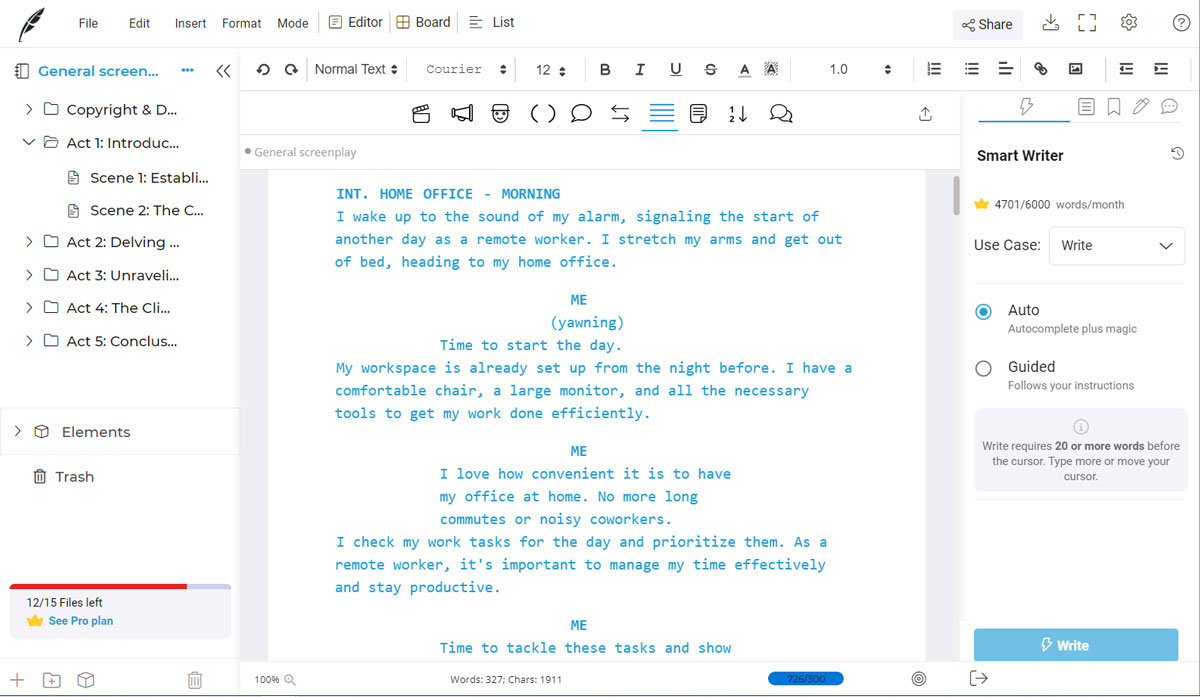
Best AI script writers in (free & paid) Powtoon
When you give an AI scriptwriter a prompt – perhaps a logline, a theme, a character concept, or even just a few keywords – it draws upon its vast knowledge base to produce text that aims to fulfill your request. This can range from a simple scene description or a few lines of dialogue to an entire short film outline or even a first draft of a screenplay. The idea isn’t necessarily to replace human creativity entirely, but rather to act as a powerful assistant, a brainstorming partner, or a tool to overcome that dreaded writer’s block.
The Allure of Automation: Benefits of Using AI for Short Film Scripts
So, why would a filmmaker or aspiring screenwriter turn to an AI for their short film script? The benefits are quite compelling, especially given the fast-paced and often resource-constrained nature of short film production.
Speed and Efficiency: This is perhaps the most immediate and impactful advantage. Writing a script, even for a short film, can be a time-consuming process. AI can generate ideas, plot points, character descriptions, and dialogue snippets in a fraction of the time it would take a human. Imagine having multiple variations of a scene or an entire outline to choose from within minutes. This rapid prototyping can significantly accelerate the pre-production phase, allowing filmmakers to move from concept to shooting much faster. For indie filmmakers juggling multiple roles, this time-saving aspect is invaluable.
Best AI script writers in (free & paid) Powtoon
Beating Writer’s Block: Every writer, from seasoned veterans to enthusiastic newcomers, experiences writer’s block. That frustrating blank page staring back at you can be a major hurdle. AI scriptwriters can be a fantastic springboard. When you’re stuck on a plot twist, struggling with dialogue, or simply need a fresh perspective, an AI can offer suggestions and alternatives, reigniting your creative spark and helping you push past stagnant moments. It’s like having an always-on brainstorming buddy.
Unlocking New Ideas and Perspectives: Because AI processes information differently than the human brain, it can sometimes come up with unexpected combinations or angles that a human writer might not consider. By analyzing a vast array of narratives, AI can suggest unique plot structures, unconventional character arcs, or thematic elements that inject fresh creativity into your storytelling. This can be particularly useful for breaking out of formulaic narratives and exploring truly innovative concepts, pushing the boundaries of what a short film can achieve.
Cost-Effectiveness: For independent filmmakers and those working with limited budgets, hiring professional scriptwriters can be a significant expense. AI scriptwriters, especially many of the online tools available, offer a more affordable alternative. While some advanced AI tools come with subscription fees, they are often a fraction of the cost of traditional screenwriting services, making high-quality script development more accessible to a wider range of creators.
Enhanced Collaboration and Workflow: Some AI scriptwriting tools are designed with collaboration in mind. They can provide a structured framework where multiple team members can work on a script simultaneously, making real-time adjustments and improvements. This can lead to a smoother workflow and a more cohesive final script, ensuring everyone involved in the project is aligned with the creative vision. AI can serve as a central hub for ideas, facilitating communication and shared understanding.
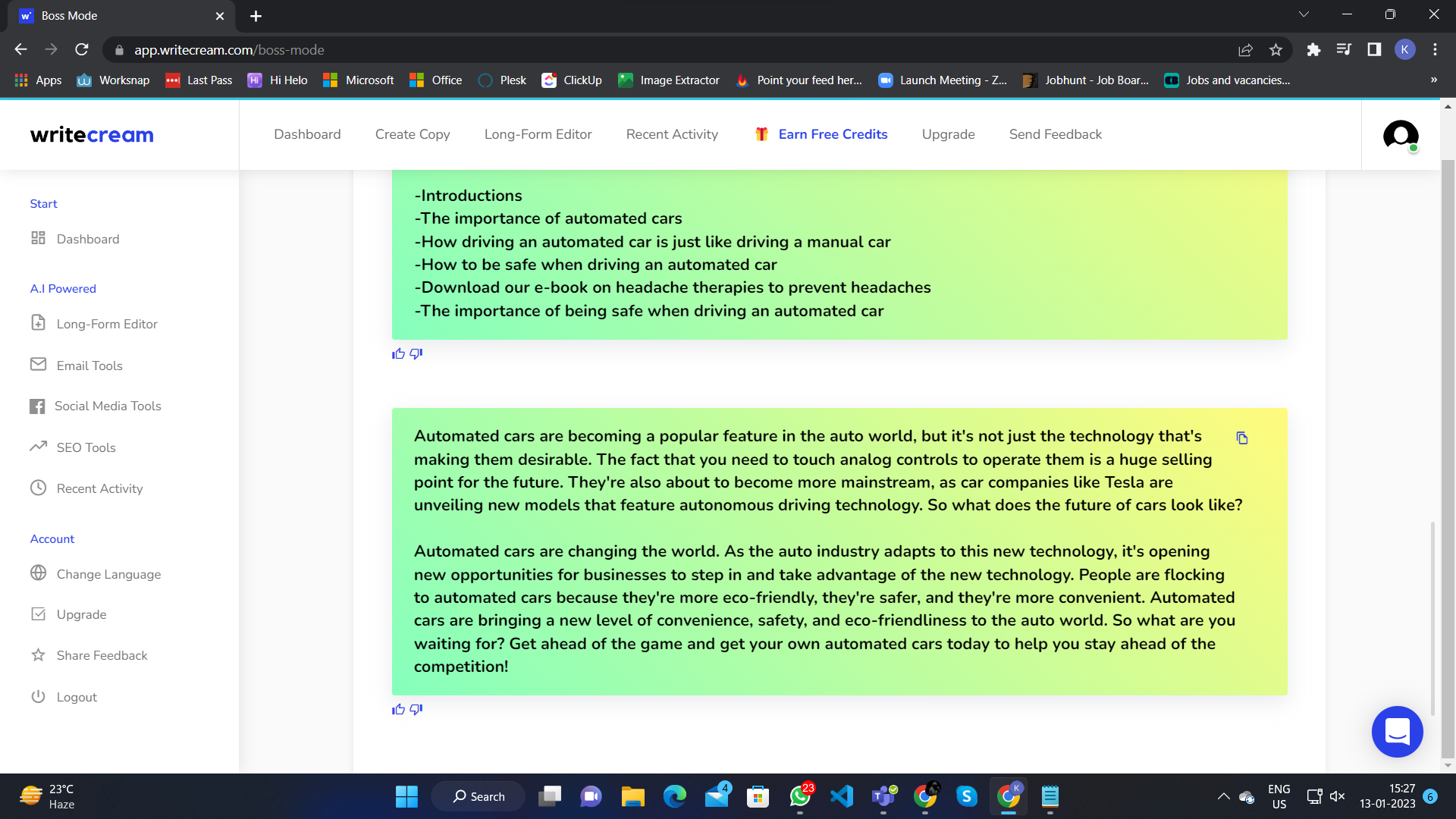
Free AI Script Generator – Writecream
Customization and Adaptability: Modern AI scriptwriters are surprisingly adaptable. You can often specify the genre, tone, pacing, and even the desired emotional impact of your script. Whether you’re aiming for a dark psychological thriller, a whimsical comedy, or a poignant drama, the AI can tailor its output to match your specific needs. You remain in control, tweaking and refining the AI’s suggestions to ensure the final product aligns perfectly with your artistic vision.
Learning and Analysis: Some advanced AI tools can do more than just generate text. They can analyze existing scripts for pacing, structure, and emotional impact, offering data-driven suggestions for improvement. This analytical capability can be incredibly useful for writers looking to refine their craft, understand storytelling principles, and identify areas where their script could be strengthened. It’s like having a script doctor who can objectively assess your narrative.
The Human Touch: Limitations and Challenges of AI Scriptwriters
While the benefits are undeniable, it’s crucial to approach AI scriptwriters with a realistic understanding of their limitations. They are tools, not sentient beings, and they currently lack the nuances of human creativity and experience.
Lack of Genuine Emotional Depth and Nuance: This is arguably the biggest hurdle for AI in creative writing. While AI can mimic human language and even generate dialogue that sounds plausible, it often struggles to capture the subtle emotional depth, subtext, and genuine human experience that makes a script truly compelling. Storytelling, at its heart, is about connecting with people on an emotional level, and AI hasn’t quite mastered that empathetic understanding. It can produce words, but it doesn’t feel them.
Risk of Homogenization and Formulaic Output: If everyone starts relying heavily on the same AI models, there’s a risk that scripts could start to feel formulaic, repetitive, and unoriginal. AI excels at pattern recognition, which means it might lean on established tropes and clichés rather than inventing truly fresh narratives. The magic of storytelling lies in its diversity and unexpected twists, and over-reliance on AI could stifle genuine creative breakthroughs.
Ethical Concerns and Copyright Issues: The rise of AI-generated content brings a host of ethical and legal questions. Who owns the copyright to an AI-generated script? If an AI is trained on existing human-created works, are there intellectual property concerns? The Writers Guild of America (WGA) has already taken a stance on AI, emphasizing that AI should be a supporting tool, not a replacement for human writers, and that human writers must receive proper credit and compensation. These are complex issues that the industry is still grappling with.
Limited Life Experience and Intuition: Great stories often spring from personal experiences, unique observations, and a deep understanding of human nature. AI, by its very nature, lacks these lived experiences. It cannot understand the complexities of human relationships, cultural nuances, or the subtle ironies of life in the same way a human can. This can result in scripts that, while technically sound, feel sterile or lack a certain authentic spark.
Accuracy and Incoherence: While AI is constantly improving, it can still sometimes produce outputs that are factually incorrect, nonsensical, or simply incoherent. It might string together words that look right but don’t quite make sense in the context of the story. Human oversight and extensive editing are always necessary to ensure the quality and logical flow of an AI-generated script.
The “Black Box” Problem: Sometimes, it’s difficult to understand why an AI generated a particular piece of text. Its internal processes can be opaque, making it challenging for writers to learn from its suggestions or to intentionally guide its creative output in a specific direction. It’s less about understanding the “why” and more about accepting the “what.”
Popular AI Scriptwriting Tools for Short Films
The market for AI writing tools is rapidly expanding. Here are a few types of AI scriptwriting tools you might encounter, keeping in mind that the landscape is constantly shifting:
General Purpose AI Writing Assistants (e.g., ChatGPT, Gemini, Claude): While not specifically designed for screenwriting, large language models (LLMs) like these can be incredibly versatile. You can prompt them to generate story ideas, character backstories, dialogue snippets, or even outline entire short film concepts. Their strength lies in their broad knowledge base and ability to understand complex instructions. However, they may require more specific prompting to achieve a true screenplay format.
Dedicated AI Script Generators (e.g., Boords’ AI Movie Script Generator, HyperWrite AI Script Writer): These tools are often more tailored to the specific needs of scriptwriters. They might have features for formatting, scene breakdown, and character development, making the output more readily usable as a script. They often have pre-built prompts or templates to kickstart your creative process.
AI-Powered Storytelling Platforms (e.g., Sudowrite, Jasper): These platforms often combine AI writing capabilities with other features designed for novelists and screenwriters, such as brainstorming tools, plot generators, and even tools to help with overcoming writer’s block. They are generally more comprehensive and offer a wider range of functionalities.
Many of these tools offer free trials or freemium models, allowing you to experiment and see if they fit your workflow before committing to a paid plan. It’s always a good idea to explore a few options to find the one that best suits your creative style and project needs.
How to Effectively Use AI Scriptwriters for Short Films (and Still Be a Human)
The key to leveraging AI scriptwriters successfully for your short films is to view them as a powerful assistive technology, not a replacement for your own artistic vision. Here’s how to integrate them effectively:
Start with Your Core Idea: Before you even touch an AI tool, have a clear understanding of your short film’s core concept, its central theme, and the emotional journey you want to take your audience on. The AI can elaborate, but you are the architect of the story.
Use AI for Brainstorming and Ideation: When you’re stuck on a particular plot point, a character’s motivation, or a unique conflict, prompt the AI. Ask it for five different ways a character could react, or three unexpected plot twists for your genre. Treat it like a creative partner you can endlessly bounce ideas off.
Generate Outlines and Scene Breakdowns: AI can be excellent at structuring your narrative. Give it your logline and ask it to generate a three-act structure, a beat sheet, or a scene-by-scene outline. This can provide a solid framework that you then flesh out with your unique details.
Drafting Dialogue (with a Grain of Salt): AI can generate dialogue, but it often lacks the natural rhythm and subtext of human speech. Use it as a starting point, then heavily refine and humanize the lines. Focus on making the dialogue sound authentic to your characters and their individual voices.
Overcoming Writer’s Block: If you’re staring at a blank page, ask the AI to write a short scene based on your characters and their current situation. It might not be perfect, but it can get the words flowing and provide a jumping-off point for your own writing.
Iterate and Refine: The first output from an AI is rarely the final product. Treat it as a raw draft. Review, edit, rewrite, and infuse it with your unique voice, experiences, and emotional intelligence. The AI provides the clay; you sculpt the masterpiece.
Focus on the “Human” Elements: Spend your creative energy on developing compelling characters with complex inner lives, crafting authentic emotional arcs, and exploring nuanced themes. These are areas where human creativity still vastly outperforms AI.
Fact-Check and Ensure Coherence: Always review AI-generated content for accuracy, logical consistency, and overall coherence. AI can sometimes “hallucinate” information or present illogical scenarios. Your critical eye is essential.
Understand Ethical Guidelines: Stay informed about the evolving discussions around AI in creative industries, particularly regarding copyright and attribution. Ensure you’re using AI responsibly and ethically.
The Future of Short Film Storytelling: A Collaborative Horizon
The rise of AI scriptwriters isn’t necessarily a harbinger of the end for human screenwriters. Instead, it signals a new era of collaboration. Imagine a world where filmmakers can rapidly prototype ideas, explore countless narrative possibilities, and overcome creative hurdles with the help of intelligent algorithms. This could democratize filmmaking even further, allowing more voices to be heard and more stories to be told.
For short filmmakers, who often operate with tight constraints and immense passion, AI scriptwriters represent a powerful opportunity. They can free up valuable time, stimulate new ideas, and provide a stepping stone for turning raw concepts into polished screenplays. The future of short film storytelling isn’t just about AI writing scripts, but about humans and AI co-creating them, pushing the boundaries of what’s possible in independent cinema. The ultimate goal remains the same: to tell compelling stories that resonate with audiences, and AI is simply providing a new, exciting tool in the ever-expanding creative toolkit. So, go ahead, experiment with these digital wordsmiths, but remember that the heart and soul of your short film will always come from you.